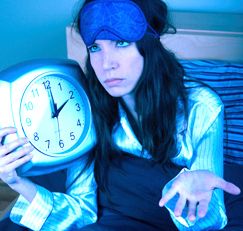
 I’ve been reading recently about how important a good night’s sleep is for feeling happy during the day and being productive in life. Unfortunately, about 30% of Americans suffer from chronic insomnia and/or sleep deprivation. In our fast paced world, many people try to do with as little sleep as possible, but then end up suffering emotional and health effects from getting too little sleep.
In order to get a good night’s sleep, I’ve created a simple guide called “Ten Tips for a Good Night’s Sleep.” By following its guidelines, my hope is that you’ll experience a better quality of sleep each night, as well as more productive and happier days due to having rested well. Feel free to forward this on to people you care about who might want to improve their quality of sleep. By resting well each night, you’ll be in good shape to handle whatever life throws at you….
Ten Tips for a Good Night’s Sleep:
- Make your bedroom conducive to sleep: people sleep best in cool, dark, and quiet environments. Use a sleep mask or whatever is necessary to create as dark a room as possible.
- Create a sleep inducing routine: try taking a bath or shower before bed, or read a book, or some other non-stressful activity before going to bed.
- Avoid alcohol, caffeine, nicotine and energy drinks: caffeine can keep you awake even 6 to 8 hours after it’s ingested, so be especially careful about “hidden” caffeine in soda, chocolate, tea, and pain relievers.
- Know how to use the light at night: if possible, avoid highly lit screens an hour before going to bed, such as looking at a computer screen. If you read before going to bed, make the light a little dim.
- Keep a consistent sleep schedule: people sleep better when they go to sleep and wake up at roughly the same time each night and day. Try to sleep an amount of hours that truly works for you (8 is recommended).
- Nap before 5pm, or not at all: if you like naps, try taking a nap for less than 30 minutes, and make it before 5pm. If you still have trouble falling or staying asleep, try not napping and see how that affects your sleep.
- Don’t eat a big evening meal: finish dinner several hours before you go to sleep, don’t eat anything an hour before bedtime, and avoid foods that can cause indigestion.
- Exercise early in the day: While exercise during the day helps people to have a good night’s sleep, don’t exercise at least 3 hours before going to bed.
- Explore ways to quiet your mind: you can’t quickly stop a fast moving car; nor can you quickly stop a fast moving mind. Therefore, have a way of relaxing and dealing with stress during your day—before your mind builds up too much momentum.
- Avoid stimulating movies or TV before bed: Emotionally intense movies or shows can make it very hard to fall asleep for a couple of hours afterwards. Therefore, avoid such stimulation at least an hour before going to bed..
..and a Bonus Tip: Use what seems to work for you through trial and error: this can include supplements such as melatonin or “Midnite or Valerian, or things specific to you.
 When you were a child, your parents most likely rewarded you on a fairly regular basis. Perhaps they told you how pretty you were, or bought you an ice cream cone as a reward for cleaning the yard. However they did it, the rewards you received helped guide you, and made you feel loved. Unfortunately, once you left your parent’s home, there was probably no one around to play the role of encourager and guide for you. The truth is–if you don’t do it for yourself, it probably won’t get done. As adults, we need to learn how to give ourselves rewards so we can be encouraged to move in a positive direction. However, most adults either give themselves indulgences all the time, or they almost never do. By learning the art of giving ourselves rewards at appropriate times, we can come to benefit from this powerful tool.
  I used to suffer greatly from a bad case of self-criticism, in my teenage years, it was so severe that I could never ask a girl out on a date. I feared that she’d say “no” and I’d end up spending the next week getting down on myself for my failure.
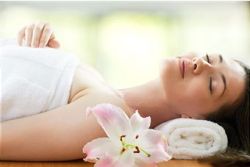 If your life is at all like mine, it’s both busy and stressful. Most people handle the onslaught of stress they face by taking periodic vacations to recover from their life. While vacations are a good idea, you can’t take one every time your life becomes hectic. In addition, taking a weekend or a week off to go to Hawaii doesn’t help you to know how to relax when you’re back in the rat race. What’s needed is a simple way to let go of stress and know how to relax that can be done while you’re still in the stressful situation—not five days later. That’s why I created the One-Breath Technique. In twenty to sixty seconds of doing this powerful method, you can experience how to relax bodily tensions, as well as let go of negative emotions and useless anxiety. It’s a wonderful gift to give yourself.
 I created the One-Breath Technique when I noticed how frequently something makes me impatient, uptight, or annoyed during the day. Without something to interrupt my stress, my minor upsets often snowballed into a momentum of negativity. Rather than using a technique that required taking several minutes away from the situation at hand, I saw the value of learning how to relax right in the moment. The One Breath Technique can be done almost anywhere and, with practice, won’t even be noticeable by others. Despite its brevity, it can effectively interrupt the build-up of stress and frustration that can so easily happen in modern day life.
 The first step in doing the One Breath Technique is to become aware that you’re stressed, upset, or could benefit from a mini-relaxation break. Next, observe the location in your body that you feel the most tightness or discomfort. For many people, they feel stress most noticeably in their shoulders, their chest, or their stomach area. Some people feel tension in many parts of their body simultaneously. Wherever you feel stress the most, imagine inhaling pure, soothing air into that area. Breathe as deeply as you can, first filling up your abdomen with air, then your chest. Once you’ve taken in as much air as you can, hold your breath for ten seconds.
 During the time that you’re holding your breath, attempt to tighten all the areas of your body that feel stressed. For example, if your shoulders are tight, tense them even more —perhaps by bringing them closer to your ears. If your stomach feels uncomfortable, tense the muscles in that area (while you hold your breath)—as if you’re preparing for someone to hit you in the belly. At the end of your ten count of tightening muscles and holding your breath, it’s time for you to fully relax. How to relax is key. Let go of your breath with a long, slow sighing sound (if you’re in a place where making a sound is okay). While you’re letting go of your muscles and your breath, think to yourself, “Let it all go,” or some other simple phrase that works for you. When you relax your muscles and your breath, you’ll notice a warm feeling of relaxation traveling through your body. Focus on the tingling warm sensations as they move through you. Notice if there are any parts of your body that still feel tight, and if so, try to let them go as well. Although it’s called the One-Breath Technique, you’re welcome to do it once or twice more if you need to, and if you have the time.
 Part of the beauty of this technique is its simplicity. In less than a minute, you can interrupt your stressful reactions that can lead to a bad day, bad health, and ultimately, a bad time in life. Fortunately, because it is brief and can even be invisible to the people around you, there is no good reason not to use it. In fact, why not try it right now? I mean it. If you like it, perhaps you’ll get in the One-Breath habit. It’s one of the healthiest habits you’ll ever have. Right now would be an excellent time to begin… Once you’ve mastered that, check out all my other