

 What do you absolutely love to do? It need not be a big thing. Perhaps you really love to watch football, or maybe you really enjoy baking your own bread. Often, we get so caught up in living our life that we forget to take time for life’s simple pleasures. Many people find that their life is so full of responsibilities that they rarely take time for fun and adventure. If that sounds like you, then you’ll benefit by using the “Pain and Pleasure List.” The Pain and Pleasure List is a catalog of at least ten things you enjoy doing and a list of ten things you don’t particularly care for. It helps you clarify what really turns you on in life and what you do only because you have to – or think you should. While we all need to do things we don’t like from time to time, life is not meant to be a series of burdens and responsibilities. By having a Pain and Pleasure List, you’ll be able to make important changes in your life with a lot more ease.
 The first step in using the Pain and Pleasure List is to simply create it. The singular act of writing down ten things you love to do and ten things you don’t care for can reveal a lot about your life. Recently, a client named James made his list while in my office. He had originally come to see me because of depression, stress at work, and problems with his wife. This was the list he created:
- Go to work.
- Market myself or my products.
- Clean the house.
- Cook.
- Be around disagreeable people.
- Spend time with my parents.
- Taxes and paying the bills.
- Give my wife a massage.
- Go shopping for clothes or gifts.
- Argue with wife.
- Ride my bike
- Be by myself, reading a good book.
- Play with the dog.
- Eat good food.
- Travel.
- Get a massage.
- Spend time in nature.
- Make love with my wife.
- Drive and listen to music.
- Watch a good football game.
You can write you own Pain and Pleasure List here.
After James made his Pain and Pleasure List, I had him estimate the number of hours every month he spent doing each activity. When he finished this part of the exercise, it was brutally clear why he was depressed, stressed, and messed-up with his wife. The total number of hours 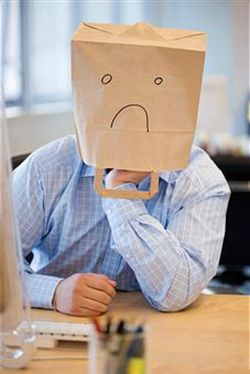 on the “pain” side of the list was a whopping 215 hours per month. The total number of hours on the “pleasure” side of the list was a meager 32 hours a month. That’s almost a seven-to-one ratio of pain to pleasure. I’ve found that when the degree of pain as compared to pleasure rises above a five-to-one ratio, people dislike their life. In order to feel good again, such people need to spend less time doing “painful” activities, and more time doing what they enjoy.
The first key to changing your life and behavior is to be aware of what’s currently not working. If, after completing your own Pain and Pleasure List, you see a similar pattern to James’, then you’ll know you’ve been denying yourself too much. You need to put pleasurable activities at a greater level of importance in your life. Sometimes people think if they make pleasure a bigger priority, the rest of their life will fall apart. Not true. When we don’t have enough good times in our life, we become less capable and effective in our career and relationships. We pay a price. As we feel good more regularly, the rising sea of our emotions tends to lift the various “boats” of our life.
 Although less frequently, some people who complete the Pain and Pleasure List see a pattern of having too much pleasure in their life. They tend to avoid responsibilities and discipline at all costs. Unfortunately, this form of hedonism doesn’t work well long term. By avoiding difficult things now, people with this predilection often create problems in their finances and relationships later on. The key to having a successful life is to find the right balance of pain to pleasure. It must be a balance that works, not only in one’s current life, but it must also work long term.
Another way the Pain and Pleasure List can be useful is as a convenient reminder of what you really like to do. Sometimes, we get so caught up in the various “chores of life” that we forget to enjoy ourselves. By putting the Pain and Pleasure List in a place where you’ll see it often, it can softly help you to remember the direction you want to go. Ultimately, to change your life, you need to change individual behaviors. If there’s a lot of pain and little pleasure in your life, ask yourself the following two questions:
- Are there any activities on the “pain” side of the list that I can easily change, do less
of, or have someone else do instead? - Are there any activities on the “pleasure” side of the list that I can easily do more of,
beginning with scheduling time for it in my life right now?
 As you ask yourself these two questions, search your lists for answers you can immediately act upon. Then, take action. Schedule a fun activity into your busy week, or see if you can get someone else to do what you always hate doing. Even a small change can snowball into a major shift in your attitude and disposition. Let the Pain and Pleasure List be your caring companion—gently reminding you of the road to greater fulfillment.
Get started right now by downloading a blank Pain and Pleasure List here. And read more about living a happier life in Happiness Resources.
 If your life is at all like mine, it’s both busy and stressful. Most people handle the onslaught of stress they face by taking periodic vacations to recover from their life. While vacations are a good idea, you can’t take one every time your life becomes hectic. In addition, taking a weekend or a week off to go to Hawaii doesn’t help you to know how to relax when you’re back in the rat race. What’s needed is a simple way to let go of stress and know how to relax that can be done while you’re still in the stressful situation—not five days later. That’s why I created the One-Breath Technique. In twenty to sixty seconds of doing this powerful method, you can experience how to relax bodily tensions, as well as let go of negative emotions and useless anxiety. It’s a wonderful gift to give yourself.
 I created the One-Breath Technique when I noticed how frequently something makes me impatient, uptight, or annoyed during the day. Without something to interrupt my stress, my minor upsets often snowballed into a momentum of negativity. Rather than using a technique that required taking several minutes away from the situation at hand, I saw the value of learning how to relax right in the moment. The One Breath Technique can be done almost anywhere and, with practice, won’t even be noticeable by others. Despite its brevity, it can effectively interrupt the build-up of stress and frustration that can so easily happen in modern day life.
 The first step in doing the One Breath Technique is to become aware that you’re stressed, upset, or could benefit from a mini-relaxation break. Next, observe the location in your body that you feel the most tightness or discomfort. For many people, they feel stress most noticeably in their shoulders, their chest, or their stomach area. Some people feel tension in many parts of their body simultaneously. Wherever you feel stress the most, imagine inhaling pure, soothing air into that area. Breathe as deeply as you can, first filling up your abdomen with air, then your chest. Once you’ve taken in as much air as you can, hold your breath for ten seconds.
 During the time that you’re holding your breath, attempt to tighten all the areas of your body that feel stressed. For example, if your shoulders are tight, tense them even more —perhaps by bringing them closer to your ears. If your stomach feels uncomfortable, tense the muscles in that area (while you hold your breath)—as if you’re preparing for someone to hit you in the belly. At the end of your ten count of tightening muscles and holding your breath, it’s time for you to fully relax. How to relax is key. Let go of your breath with a long, slow sighing sound (if you’re in a place where making a sound is okay). While you’re letting go of your muscles and your breath, think to yourself, “Let it all go,” or some other simple phrase that works for you. When you relax your muscles and your breath, you’ll notice a warm feeling of relaxation traveling through your body. Focus on the tingling warm sensations as they move through you. Notice if there are any parts of your body that still feel tight, and if so, try to let them go as well. Although it’s called the One-Breath Technique, you’re welcome to do it once or twice more if you need to, and if you have the time.
 Part of the beauty of this technique is its simplicity. In less than a minute, you can interrupt your stressful reactions that can lead to a bad day, bad health, and ultimately, a bad time in life. Fortunately, because it is brief and can even be invisible to the people around you, there is no good reason not to use it. In fact, why not try it right now? I mean it. If you like it, perhaps you’ll get in the One-Breath habit. It’s one of the healthiest habits you’ll ever have. Right now would be an excellent time to begin… Once you’ve mastered that, check out all my other