

‘Twas the week before Christmas and in my own house I was frantic and hurrying, and felt like a louse. That was five years ago. That day I vowed I would never again get sucked into the hyped up of “Christmas Spirit.” Instead of running around, fighting traffic, and losing my temper with store clerks, I decided I would do whatever it takes to really enjoy the holidays. After all, it’s supposed to be a time of celebration and spiritual renewal. Why not make it into one? Of course, if you’re at all like I was, you’re going to have to change how you “do Christmas” if you ever hope to truly enjoy yourself. I’ve found that four simple keys can help people turn their hurried Holidays into heavenly Holy days.
 First, try to remember the original purpose of the Holiday Season. Whether you celebrate Christmas or Hanukah, they both represent a time to appreciate the blessings of life, God’s grace, and the end of darkness and the beginning of new light and hope. Can you remember a Christmas memory from your childhood that was filled with joy, comfort, and love? That’s really what we all want to experience during the Holidays. Yet, sometimes it seems we’re being led down a fast flowing river that only leads to stress, insecurity, and even sadness. By having a clear picture of what a truly happy Holiday Season would be like, you have a fighting chance to create what you want. Without your own unique Christmas “fantasy” to hold onto, you’re likely to be swept into the currents of what everybody around you is doing.
Once you have an idea of what you’d like to experience during the Holidays, your next step is to figure out creative ways to avoid what you don’t like about Christmas. For example, if you don’t enjoy running around buying a lot of presents, then don’t. Most people ask themselves the wrong question when it comes to planning their Christmas. Subconsciously, they think, “What should I do now that it’s the Holiday Season?” If you “should” all ask yourself, “What would I love to do to spread joy and good cheer this time of year?” Listen for your own unique answer to that question. By following your heart, you’ll feel the joy of Christmas, and enliven the Spirits of those you love.
 A third way to keep the Spirit of the Holiday’s alive is to give a present to your self. I don’t mean another sweater or necktie. I mean something that will help you to experience the joy, peace, and sacredness of life. Last year, my wife and I spent three days in Yosemite in the middle of December. Leaving the craziness of city life for the grandeur of nature was the best present possible for both of us. This year we plan to go to a desert resort. As we sink into a jacuzzi bath while listening to Mozart, we’ll be sure to reminisce about the madness we left behind back home. What would be some treat you could give to your self that would add meaning, joy, and relaxation to your winter season? Schedule it in now, before you get too swept up in the Christmas rush.
Lastly, to have a truly Merry Christmas or Happy Hanukah, plan ahead for something that you’d truly like to do. If you’re not spending the Holidays with your family, call some friends and see if they’re available. Perhaps you can create a meal together, play a fun board game such as Pictionary or Monopoly, or simply have a meaningful conversation. A nice thing to do around a Christmas dinner is to ask your friends and family questions such as:
1) What’s your favorite Christmas (or Hanukah) memory?
2) What was one of the most special moments you experienced this past year?
3) What are you truly grateful for in your life right now?
4) What was the worst Christmas gift you ever received?
5) What gives you a real sense of joy in life?
Asking questions like these to those you love can help bring intimacy and a sense of the sacred back into the Holiday Season. Your fondest Christmas memories are probably not of presents you’ve been given, but of special times you’ve spent with people you cared about. Having a really good conversation with a friend or family member can be one of the best “gifts” you ever receive.
Although advertisements try to convince us otherwise, the Holiday Season is not a time of ease and joy for most of us. If you plan to have a good Christmas, you need to be deliberate about creating a sacred time with your self and/or the people you care about. By following your own heart, and keeping true to the original purpose of the Season, you can make this your best Holidays ever.
 One day I called up my friend, Susan, and asked her how she was. She said, “Things are great. Joe and I just got back from another week long vacation.” I realized that, just about every time I talked to Susan, she had recently gone on vacation. I was a bit annoyed and jealous. “How do you take so many vacations?” I asked. Her reply made me even more annoyed, “We simply make it a priority.” I felt a certain amount of self-pity as I shot back, “Boy, I wish my life was set up so I could take so much time off.” In a compassionate, yet direct manner, Susan replied, “You can if it’s important enough to you. Joe and I just decided we’d take eight weeks off each year. There’s a lot of resistance to doing that, but we’re committed to living the life that we want to live.”
  It’s that time of the year again to make resolutions. Instead of making them and then breaking them like most people do, why not put some punch behind your resolutions? I helped invent a method that practically guarantees your resolutions will be kept. The technique, which I call the Integrity Contract, helps people stay motivated when the going gets tough. After all, it is only people who are consistent over a long period who ultimately succeed in life

 As a psychotherapist, I often counsel couples who frequently argue. Early in my career, I tried to help these people with communication techniques aimed at helping them be more open with each other. Yet, it rarely worked. They would simply forget the method and continue with their verbal attacks. When I realized couples behave like hurt infants when they get into a fight, I asked myself, “What helps crying infants to feel better?” The answer was obvious–they like to be held. As parents gently hold their baby, the baby soon feels better. Before you know it, the infant is giggling and happy. I wondered if a similar approach might work with adults. After much trial and error, I found something that works even better than I expected. I call it “The Spoon Tune.”
 while in a spooning position, breathe in unison with your mate. Generally, it is best for the bigger partner to follow the breath of the smaller partner. When the smaller person inhales, the other partner should inhale. When the smaller partner exhales, the other should exhale. Hold each other and breathe in unison like this for at least four minutes. Do not say anything. As soon as your mind wanders, focus once again on breathing in unison with your partner.
 Once you begin the Spoon Tune, no talking allowed. If possible, find a place to lie down together. If that is not possible “spoon” standing up. The key to doing this method successfully is to breathe together. As you breathe together, try to focus on and be present with each breath. Use your breath as a meditation. By focusing on your breath as it goes in and out in rhythm with your partner’s breath, you will feel more peaceful, safe, and connected, spoon for at least three minutes.
 I recently took an online course called “Awakening Joy.” It was quite good, maybe even as good as my own online course called “
 For example, today I was playing with my dog and we were both having a great time. Then, when she was done with playing, she came over to cuddle with me in my lap. We cuddled for a moment, and I enjoyed the feeling of petting her and feeling my deep love for her. Then after a minute, I had the thought, “What do I need to do next?” Of course, my “list” is never done, so there were plenty of things to do, but why did I need to curtail such a sweet moment so quickly? In fact, I did not have to, but I realized I have been trained by our culture to always be productive—even at the expense of hanging out with more moments of love, intimacy, and joy. Can you relate to this?
 So having seen my own tendency to start thinking of my “to do” list in the midst of positive emotions, I have taken steps to go against it. Nowadays, when I see that I am curtailing a sweet and/or intimate moment, I try instead to stay with my positive experience. I take a deep breath and remind myself; nothing is more important than joyful moments. I attempt to “hang out” with such feelings until they naturally drift away.
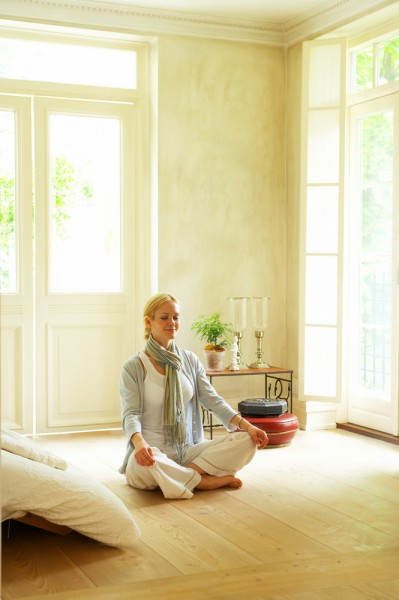 When clients come into my office, they describe many types of problems. Yet, whatever their situation, they almost always complain that they feel stuck in feelings of anger, sadness, fear or hurt. In order to help my clients, I teach them something called The Sensation Meditation (SM). This meditation guides people to focus on their negative feelings in a specific manner. By helping people fully feel their emotions without distraction, this meditation helps people move through “stuck” feelings into a place of healing. When people finish using this simple three minute technique, they frequently report that their negative feelings have vanished, and that their body feels relaxed, peaceful, and at ease.
 What would it be like if you found out that you had a million dollars in a secret bank account, but you didn’t know it? Wouldn’t that be great? Well, in a certain way you do. You have enormous riches locked within you in the form of positive feelings—such as love, gratitude, compassion, and joy. The problem is, most people haven’t known how to access these feelings. Yet, the new field of
  I sell (for very little money I might add), a systematic course in teaching people the best and most powerful ways to quickly boost their level of happiness. There are over 30 methods in my Deeper Happiness course that have been shown to boost people’s level of happiness, and most of them take under three minutes a day to do. That’s great news. It’s like learning you had a million dollars lying around in the bank, but you didn’t know it.
 Although such books contain valuable information, virtually no one uses what they read from books in a systematic manner in their daily life. It’s just too big of a jump. What’s needed is a simple, almost automatic way to be reminded to use Positive Psychology exercises in daily life.
 You are living in a dangerous cult. I mean it. Of course, like most people in cults, you don’t think it’s dangerous—or that it’s even a cult. This “cult” that you (and I) are living in is the hyper capitalist economic system of modern day life.
 happiness that we are all on, you can’t assume anything that you’ve heard. Unfortunately, our culture is constantly pushing its ideas about finding the “good life” onto us, and that brainwashing does not necessarily have anything to do with being happy. After all, does Donald Trump look joyous to you? In the last twenty years, the average GDP of Chinese citizens has gone up 400%, and yet their average level of happiness has actually gone down.
 Here’s just one example. Highly contented people tend to schedule time each week for activities they truly enjoy. On the other hand, unhappy people tend to make excuses as to why they don’t have time for what they really like to do. Here’s another example. Happy people make being with friends and enjoying life a central priority in their life, whereas less contented folks make things like making money their main priority.
 that the American Dream is actually a repetitive, busy, and not too unpleasant nightmare. I soon realized that always striving for more, always being busy, and constantly competing for recognition was not a path to greater peace of mind. As I began to see through the brainwashing of Western culture, I began to notice what really made me happy. What really made me happy wasn’t having bouncy hair, a big house, or a Mercedes. It ends up it was little moments of depth and joy I could find in everyday life. Nowadays, I spend more time playing with my dog, watching sunsets, hanging out with my friends, reading great books, and meditating.