


Having just paid my taxes, I got to thinking about how we spend money in this culture. It ends up there are some proven ways to spend money that make people happier. For example, when you spend money in ways that bring you shared enjoyable experiences with friends or family, it ends up you get a lot of “happiness bang” for your buck. It has also been shown that spending money on material possessions—like a nice car or house—has little effect on one’s level of happiness. Why is that?

Studies show that when we spend money on possessions, our level of happiness goes up—but only for a short period of time. We soon get used to the nice car or house, and it fails to bring us any new joy after a surprisingly short period of time. As an example, a friend of mine just spent a year and tens of thousands of dollars remodeling her house. When I asked her two months after the house was done if she was thrilled with the results, she said, “I hardly notice it anymore.”
Since we work hard to earn our money, it’s important to consider what is the best way to spend it in order to maximize our happiness. One approach to spending money to maximize happiness is to do what I call “investing in yourself.” Investing in yourself means spending a certain percentage of your income on improving your life’s skills and becoming a happier, healthier, and a more peaceful person. Since wherever you go, you take YOU with you, it’s a good idea to make sure you’re always improving on the YOU that is interacting with the world.
 In my own life, investing in myself has made a huge difference. I used to be a depressed, shy, and suicidal teenager. Yet, at age sixteen, I decided to take 5% of whatever money I earned and use it to invest in myself. Over the years that has meant buying self improvement books, going to therapy, taking courses on meditation, going to workshops, and buying all kinds of health products. My life now is incredibly rich and blessed—largely because I am now a much more expanded person. By investing in myself and my skills over many years, I have now achieved a level of peace and happiness I could not have imagined before.
We are always making investments in our future. We plan vacations, buy possessions, pay for college for our kids, and invest in our health. But do you regularly invest in your continual improvement and ability to really enjoy your life? If not, then your life will likely be no better five years from now. Therefore, I encourage you to put aside a certain amount of money each month or each year just to improve your skills, expand your happiness, and invest in your ability to find true inner peace.
If you think I can be of any help in that endeavor—through therapy, coaching, or my “Deeper Happiness” course, I would be honored to be of service…

 Being that I’m a gadget guy, I’m always looking for simple things that can help me to be kinder, more relaxed, and more aware. At Wisdom 2.0, I felt like a kid in a candy store. I talked with a dozen app developers who created apps to help with meditation, or ways to remind yourself to do an act of kindness. Anyway, what I got from the conference, (other than some new friends), was a sense of the importance of daily spiritual practice.









 One day I called up my friend, Susan, and asked her how she was. She said, “Things are great. Joe and I just got back from another week long vacation.” I realized that, just about every time I talked to Susan, she had recently gone on vacation. I was a bit annoyed and jealous. “How do you take so many vacations?” I asked. Her reply made me even more annoyed, “We simply make it a priority.” I felt a certain amount of self-pity as I shot back, “Boy, I wish my life was set up so I could take so much time off.” In a compassionate, yet direct manner, Susan replied, “You can if it’s important enough to you. Joe and I just decided we’d take eight weeks off each year. There’s a lot of resistance to doing that, but we’re committed to living the life that we want to live.”
  It’s a rainy, sleepy afternoon, and you’re stuck in front of your computer. Your bones are weary, your eyes
  If someone asked me to describe in four simple words how they could achieve wealth, health, and happiness, my answer would be easy: ask the right questions for success. When we ask ourselves good questions, it leads us to make better decisions as to where and how to spend our time. When we fail to ask the right questions, we can easily fall prey to mechanical routines, other people’s goals, and a life of unhappiness. When it comes to taking charge of your time and your life, asking the right questions can be the answer you’ve been looking for.
 These five questions are an easy, quick, and powerful way to gain important insights that will help you to plan your time wisely. Rather than waiting until a problem is big, these questions will help you to handle things when they’re small and easily handled. By writing your answers in a journal, or taking turns answering these questions with a friend, you can help each other create the life you truly desire.
 Setting and achieving goals is perhaps the most documented technique for manifesting what you want—efficiently and effectively. Since writing your goals is so powerful, it’s important to know precisely what you want to create so you will be pleased when you get it. If you don’t specify your dreams clearly enough, you can end up creating a nightmare. Sometimes people who write down their goals do create a life that is out of harmony. Why? Because their goals are all outward goals—such as making more money. Yet, manifesting more money
 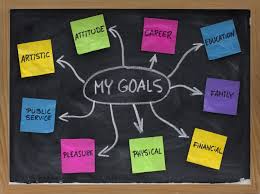 create a balanced goal, you need to know two things. First, you need to know exactly what you’d like to manifest in the material world. Second, you want to identify what you hope to experience as a result of achieving your external goal. The easiest way to know what
  that in the above example with Sarah, I had her create an internal way to measure her progress towards more security and comfort. You can always improve what you can measure. Although creating an “intuitive 1 to 10 scale” is not absolutely precise, I’ve found that people say it works surprisingly well in measuring their progress. All you need to do is rate, on an internal 1 to 10 scale, how you’re currently doing in the area you want to work on. Then, about once a week ask yourself, “How am I now doing (on a 1 to 10 scale)?” Hopefully, you’ll see gradual improvement. If not, it may mean you need to do different tasks in order to be more successful.